Department: Geología

Area: Palaeontology

Research group: GRUPO DE GEOCIENCIAS OCEÁNICAS

Email: diana.ochoa@usal.es

Address: Plaza de los caidos s/n, salamanca, 37008

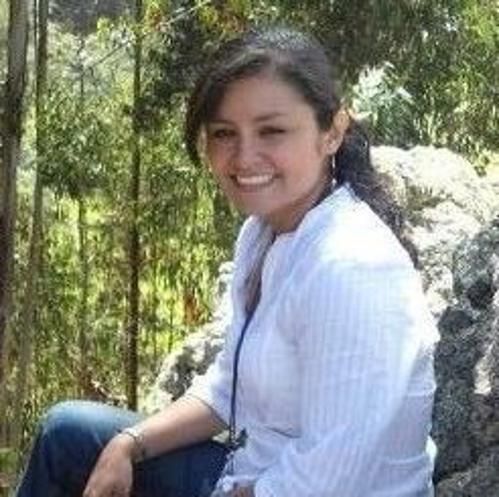
Doctor by the Universidad de Salamanca with the thesis Astrobiochronological Constraints on Margin to deep basin correlations across the Balearic Promontory and the Valencia basin 2016. Supervised by Dr. Francisco Javier Sierro Sánchez, Dr. José Abel Flores Villarejo.

Many of us have stood before breathtaking landscapes and wondered how such places were formed and preserved. For me, turning that wonder into knowledge has been one of the most rewarding parts of my career. I am a Geologist, specializing in microfossils—tiny but powerful records of Earth’s history. Whether continental (pollen and spores) or marine (foraminifers and others), they allow me to reconstruct past environments, trace ecosystem evolution, and build timelines of key geological and biological events. What may seem like a romantic or obscure pursuit has wide applications, from deepening our understanding of Earth’s history to providing data of great value to industries like oil exploration, where precise dating and environmental reconstructions can save millions. My research focuses on how terrestrial and marine ecosystems responded to long-term climate change and tectonic processes during the Cenozoic. This work bridges two areas: biostratigraphic interpretation (dating of the rock record) and the ecological and environmental insights preserved in the fossil record (palynology, micropaleontology, paleoecology). In recent years, I have concentrated on the co-evolution of terrestrial and coastal-marine environments along continental margins influenced by high marine productivity zones, with a focus on the Humboldt Current System (HCS). Though geographically limited, the HCS is among the most productive marine ecosystems worldwide, sustaining one of the richest fishing grounds through nutrient-rich upwelling. Yet, this productivity comes with a fragile balance—abundant biomass but low trophic diversity. On land, the HCS strongly shapes arid ecosystems such as the Atacama and Peruvian Coastal Deserts by controlling coastal humidity and precipitation. To unravel the dynamics of this coupled system, I integrate marine and terrestrial records. While marine records are relatively continuous, continental ones are scarce in hyper-arid regions. Palynology offers a crucial window into these environments: pollen and spores preserve signals of vegetation, plant evolution, and climate. When combined with sedimentology, geochemical proxies (isotopes, XRF, XRD), and other fossils (wood, diatoms, vertebrates, invertebrates), they enable robust reconstructions of past ecosystems. Currently, my work centers on Neogene ecosystems, a period with climatic conditions comparable to those projected for 2100—warmer temperatures and CO₂ levels above 420 ppm. My goals are to: (i) reconstruct plant community diversity and composition along the Peruvian Coastal Desert, (ii) characterize past climates and landscapes, and (iii) understand how terrestrial biomes responded to changes in coastal productivity. By linking terrestrial and marine records, this research helps quantify the role of the Humboldt Current System in regional and global climate dynamics. It also provides critical perspectives for anticipating future environmental changes, including those that may affect the stability of global fish supplies.