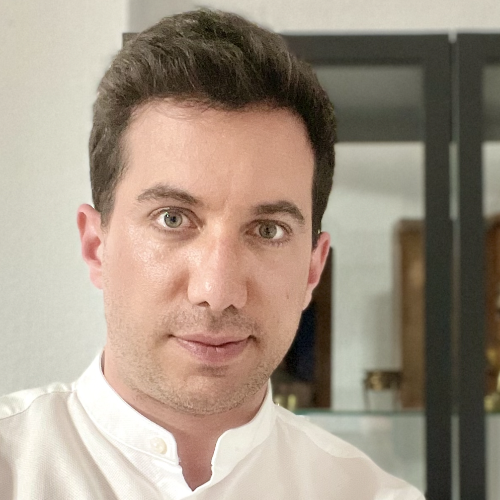
Raúl
Velasco Morgado
Profesor Permanente Laboral
Departamento: CIENCIAS BIOMÉDICAS Y DEL DIAGNÓSTICO
Escuela de doctorado: FORMACIÓN EN LA SOCIEDAD DEL CONOCIMIENTO
Instituto: INSTITUTO UNIVERSITARIO DE ESTUDIOS DE LA CIENCIA Y LA TECNOLOGÍA
Área: Historia de la Ciencia
Grupo de investigación: CULTURA ACADÉMICA, PATRIMONIO Y MEMORIA SOCIAL (CAUSAL)
Grupo de investigación: GRUPO DE INVESTIGACIÓN HISPANO-LUSO EN ESTUDIO DE LA POLIO, POST-POLIO Y EMFERMEDADES MARGINADAS (IBERRARA)
Email: rvmorgado@usal.es
Web personal: https://raulvmorgado.wixsite.com/misitio


Doctor por la Universidad de Salamanca con la tesis La embriología en España durante la ii república y el franquismo (1931-1975) 2013. Dirigida por Dr. Antonio Carreras Panchón.
Doctor en Medicina (Historia de la Medicina) y médico especialista en Pediatría y en Medicina Familiar y Comunitaria, Raúl Velasco Morgado trabaja como profesor de historia de la medicina y de la ciencia en la Facultad de Medicina de la Universidad de Salamanca. Ha sido colaborador honorífico en el área de Historia de la Ciencia de la Universidad de Valladolid e investigador visitante en el Centro de Estudios Interdisciplinares del Siglo XX de la Universidad de Coímbra. Sus principales líneas de investigación son: la historia de la anatomía; la historia de la embriología, la generación y la reproducción; la molecularización de la biomedicina contemporánea (y, en especial, de la patología del niño) y la cultura visual de la ciencia. Además, en los últimos proyectos competitivos de los que ha sido investigador se ha centrado en la historia de las enfermedades raras, la circulación del conocimiento relativo a ellas y sus espacios de investigación y asistencia. Entre otras obras, es autor de la monografía Embriología en la periferia: las ciencias del desarrollo en la II República y el Franquismo (CSIC, 2016). Es miembro del grupo de investigación reconocido Iberrara (Grupo de investigación hispano-luso en historia de la polio, síndrome postpolio y enfermedades marginadas) en el Instituto de Estudios de la Ciencia y de la Técnica de la Universidad de Salamanca y miembro de la Red Temática Internacional «Lengua y Ciencia». En la actualidad es, asimismo, secretario académico de la Sociedad Española de Historia de la Medicina.